Evergreen River View
Afternoon light falling across a wooden worktable

What we believe

Later life deserves more than just passing the time.

A few thoughts on why we do what we do, and the values that shape every session we run.

Back to home

Where this started

Evergreen River View began with a straightforward observation: a lot of people reach retirement or later life with more time than before — and less of a sense of what to do with it that feels genuinely theirs. Not obligations, not family duties. Something chosen. Something that returns a little pleasure each week.

The courses grew from that. Not from a business plan, but from a belief that the right kind of hobby class — small, patient, structured, social — could give people something real to look forward to. That's still the whole point.

The guiding thought

"Curiosity doesn't have a retirement age."

We hold this plainly, without drama. The desire to learn something new, to make something, to sit in a room with people who share an interest — that doesn't fade with the years. It just needs a good enough reason to act on it.

Our vision is simple: that more adults in Japan have access to a weekly activity that is genuinely enjoyable — not demanding, not goal-driven, not competitive — just a couple of hours in a room where something interesting is happening and the people are kind.

We think the best hobby classes are the ones where people stop watching the clock because they're too occupied. That's what we aim for in every session. Not impressive results. Not rapid progress. Just time well spent.

What we actually believe

1

Enjoyment is the point

We're not preparing anyone for an exam or a career change. The only measure that matters is whether people leave a session feeling like it was worth coming. That framing changes almost every decision we make about how to run a class.

2

Pace matters more than content

Moving through material quickly impresses no one if half the group hasn't kept up. A class that goes slowly enough for everyone to feel settled is a better class, full stop. We'd rather cover less and have it land than cover more and leave people behind.

3

Small is meaningful

In a group of six, people notice each other. They remember names. They check in. That kind of quiet familiarity is part of what makes a class worth returning to. It's not something you can scale without losing it.

4

Questions should always be welcome

There is no such thing as a question that holds up the class. Questions are the class. An instructor who makes someone feel embarrassed for asking something has failed at the basic job. We take this seriously.

5

Beginners deserve the same respect as anyone else

Not knowing something is the natural starting point for learning it. We don't treat beginners as problems to solve or gaps to fill. We treat them as people who have chosen to spend time here, which is exactly what they are.

6

The social part is not incidental

For many participants, the chance to spend time with other people in a relaxed, purposeful setting is as valuable as anything they make or learn. We don't treat socialising as a side benefit. It's one of the main ones.

How these beliefs show up in practice

Sessions start with a recap

Every meeting opens with a brief, unhurried look back at what was covered last time. This isn't a test — it's a way of making sure no one feels like they've lost the thread before the new material begins.

Printed notes go home with you

Every session has a printed reference sheet. Not because we expect people to study at home, but because being able to look something up later — at leisure, without a screen — keeps the hobby alive between sessions.

Seating and movement are considered

Practical sessions are designed to be done seated where possible. Where standing or moving is involved, it is always optional. Nobody should feel uncomfortable in their own body in order to participate.

Group size is held deliberately small

We cap groups at eight. Not because we couldn't fill more seats, but because the quality of what happens in the room changes when the number goes higher. Keeping groups small is a choice we make on purpose, every time.

Every person in the room is different

No two people come to a first session with exactly the same background, the same level of confidence, or the same reason for being there. Some arrive with a clear idea of what they want; others are just looking for something to do on a Thursday afternoon, and that's entirely fine.

We don't assume anything. We don't expect participants to know what they want from the course before they've had a session or two. We just try to make sure the room feels like a place it's easy to be in, and that the instructor is paying enough attention to notice if someone is struggling or bored or ready to try something harder.

That's a simple idea. It just requires actually paying attention, which is what we ask of everyone who teaches for us.

What personalisation looks like in practice

  • Beginners and slightly more experienced participants can be in the same group, because the small size makes individual attention possible.
  • If something takes longer for one person, the group accommodates that naturally — there's no pressure to keep a uniform pace.
  • People can choose how much they share and how much they just observe, especially in the first session or two.
  • The instructor checks in quietly rather than calling on people, so nobody is put on the spot.

We're not trying to reinvent the class

There's nothing radical about gathering a handful of people together once a week to learn something new. People have been doing it for as long as there have been things worth learning. What we try to do is get the basics right — and not add unnecessary complications.

Where we have made deliberate choices, they tend to be subtractive rather than additive. We removed grades. We removed pressure to perform. We removed the sense that you have to know things in advance. What's left is a course that tries to be pleasant to attend and useful to think about afterwards.

If we've been thoughtful in any particular direction, it's in making things accessible. That's less glamorous than innovation, but it's the thing that actually matters when someone new walks through the door for the first time.

Honesty as a starting point

We're clear about what to expect

Each course page describes honestly what happens in sessions, how many there are, what's included, and what you'll need to bring. We don't try to make things sound more elaborate than they are.

Pricing is fixed and transparent

The price listed is the price you pay. There are no extras introduced after you sign up. If materials are provided, they're included. If you need to bring something, we'll tell you clearly before you commit.

We don't exaggerate results

Taking a photography class will not make you a professional photographer. A gardening course will not turn a difficult balcony into a flourishing garden overnight. We offer a good starting point, well-guided — and that's what we say.

The room matters as much as the lesson

One of the things people sometimes mention after a few sessions is that they hadn't realised how much they'd missed having somewhere to go. Not a place with a specific purpose or a schedule of obligations — just a place where they're expected, where someone knows their name, and where there's something to do together.

That kind of belonging is quiet and easy to overlook. But it's real, and we think it's one of the more valuable things a good class can offer.

We try to create the conditions for it. We can't manufacture it — that depends on the people in the room — but a small group, meeting regularly, doing something together, has a way of finding its own warmth.
Thinking past the last session

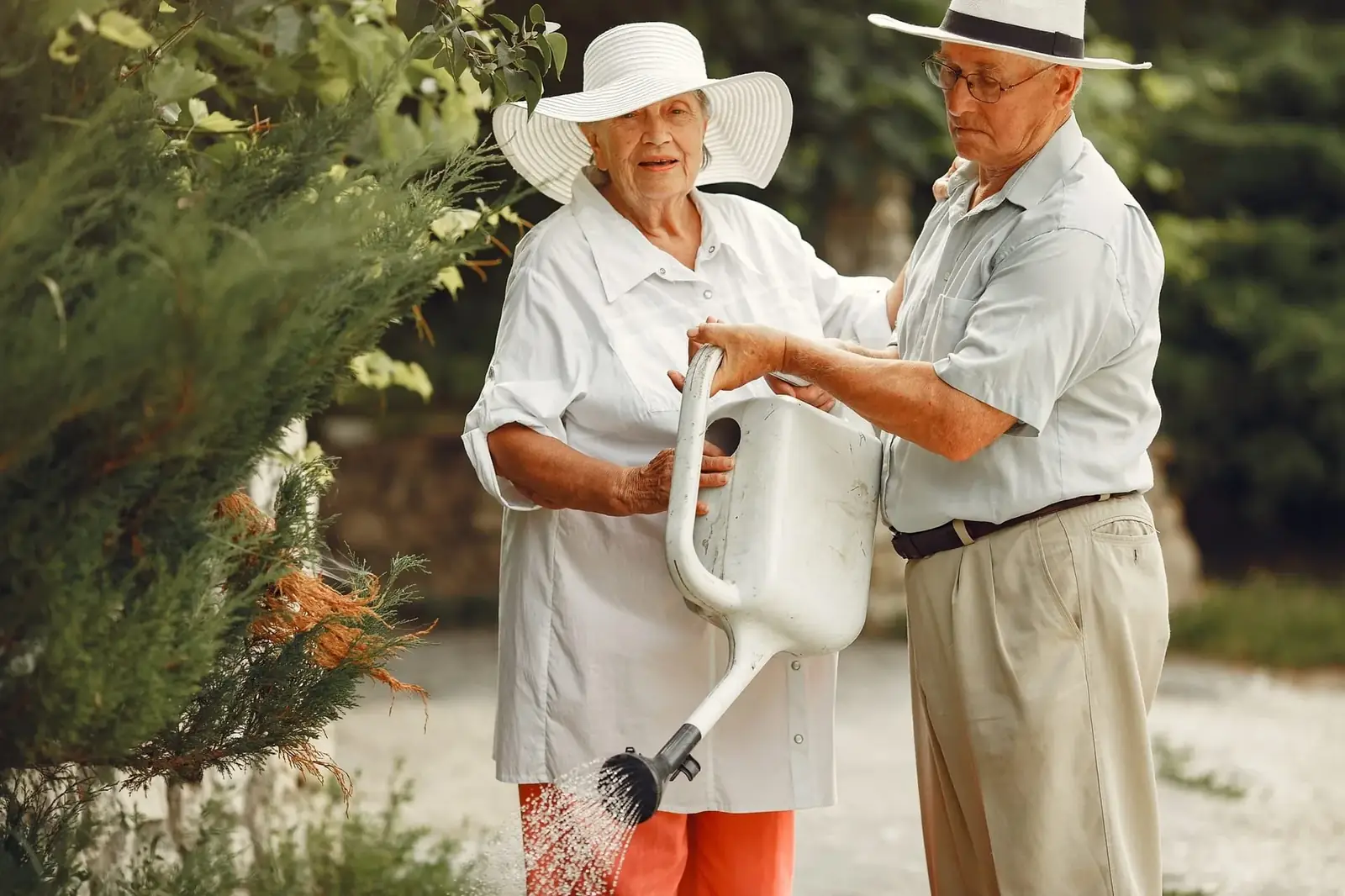
A course that ends and leaves nothing behind isn't particularly useful. We try to make each class something people can carry with them — through the printed notes they take home, through habits that are easy to continue alone, and through the confidence that comes from having done something new and found it manageable.

Beginner Photography, for example, doesn't end with people dependent on another class. It ends with them comfortable pointing a camera at something and thinking about the frame. That's a skill they can practise on their own, for free, for the rest of their lives.

The Seasonal Gardening Course sends each participant home with a plant and care notes they can actually use. Watercolour Studio introduces techniques simple enough to return to on a quiet afternoon at home.

We think of a course as an opening — a good starting point that makes continuing easier and more enjoyable. Not a dependency. Not a subscription. Just a door that's been opened, by choice, at a comfortable pace.

What this means if you join us

You'll be treated as capable of learning, regardless of your starting point.

Nobody will hurry you, compare you, or make you feel out of place for going slowly.

You'll have something tangible to take home from every session — a photograph, a plant, a page of notes, a sketch.

You'll know what you're getting before you arrive, and the price you see is the price you pay.

If you have a question — before, during, or after a session — you're welcome to ask it. That's the whole arrangement.

If any of this sounds right to you

Have a look at the courses, or just send a short message if you'd like to know more. We're glad to answer questions calmly, without pressure, at whatever pace suits you.